Spa & Hot Tub Shock

 
Filter

Filters

Subcategory

    Reset

    Hot Tub Shock & Spa Shocks

    Whether you're winding down after a long day or hosting a weekend spa party, your hot tub should be ready and inviting. It should give you that perfect hot tub experience where the water is crystal-clear and devoid of unpleasant odors, so you can simply sink in and relax. HTH™ steps in with its superior hot tub shocks and spa shocks to ensure this vision becomes a reality every time!

    Hot tub shock, or spa shock, is a powerful treatment designed to eliminate contaminants, eliminate bacteria, and refresh the chemical balance of your spa water. Imagine it as a rejuvenating deep cleanse for your hot tub that ensures the water remains clean, clear, and safe for your ultimate relaxation.

    But why are hot tub and spa shocks necessary? The warm waters of hot tubs and spas are often a haven for bacteria and algae. With the addition of body oils, lotions, and other external contaminants, the water can quickly become murky and emanate a less-than-pleasant aroma. Shocking your hot tub at least weekly revitalizes the chemical balance and ensures your soaking sessions are serene.

    HTH's hot tub shock and spa shock treatments are the perfect solution for every spa owner seeking the gold standard of water care. Great for most spas—including those using bromine, chlorine, or biguanide—HTH's hot tub shock is adaptable to your unique spa needs. It swiftly eliminates odors and contaminants, making your spa water clear and invitingly fresh.

    Our product's detailed, user-friendly instructions remove all of the guesswork, ensuring a successful and efficient shock treatment every time. And while it's tough on contaminants, destroying algae and bacteria without hesitation, it's easy on you.

    With HTH spa shocks, there's no need to worry about skin irritation or your swimsuit's color fading after a soak. Plus, our formula is designed to protect your spa's valuable equipment and surfaces, including pumps, filters, and heaters, safeguarding the longevity of your investment. HTH recommends shocking your spa water weekly to keep it clean and clear for all!

    So, are you ready to elevate your hot tub experience? Discover the magic of HTH products for yourself. Head over to our store locator page and find the closest store carrying our top-tier hot tub shock and spa shock today!

    A bottle of HTH spa Non-Chlorine Shock Oxidizer sitting on a concrete spa coping stone, with turbulent blue water and mosaic tiles behind it. The orange label text features 'NON-CHLORINE SHOCK OXIDIZER' and benefits like 'Clears cloudy water'.

    Spa & Hot Tub Shock
    Frequently Asked Questions

    • How often should I shock my hot tub?

      Shock your hot tub once a week or after every heavy use session (3+ people). Non-chlorine shock (MPS) is ideal for regular weekly oxidation because it works fast and re-entry time is only 15–20 minutes. Use a chlorine shock treatment monthly or when algae, cloudiness, or strong odors develop.

    • What is the difference between chlorine shock and non-chlorine shock for a hot tub?

      Non-chlorine shock (MPS) oxidizes organic waste without adding chlorine, has a short re-entry time (15–20 min), and is ideal for weekly maintenance. Chlorine shock adds sanitizer and is better for treating algae, bacteria outbreaks, or when sanitizer levels are severely depleted. Use both as part of a complete hot tub care routine.

    • What is the purpose of shocking a hot tub?

      Shocking a hot tub oxidizes and eliminates the organic waste — body oils, sweat, cosmetics, and other contaminants — that accumulate with each use and consume your sanitizer. Without regular shocking, organic buildup causes cloudy water, odor, foam, and reduced sanitizer effectiveness. Weekly shocking is one of the most important habits in hot tub maintenance.

    • When should I use chlorine shock vs. non-chlorine shock in my hot tub?

      Non-chlorine shock (MPS): use weekly for routine oxidation in any sanitizer system — short re-entry time (15–20 min), reactivates the bromine bank, and has no CYA concerns. Chlorine shock: use when bacteria count is suspect (cloudy or green water), after periods of heavy use with no shocking, or when non-chlorine shock alone isn't resolving a water problem. Chlorine shock requires 8–24 hours before re-entry.

    • How do I shock a bromine hot tub?

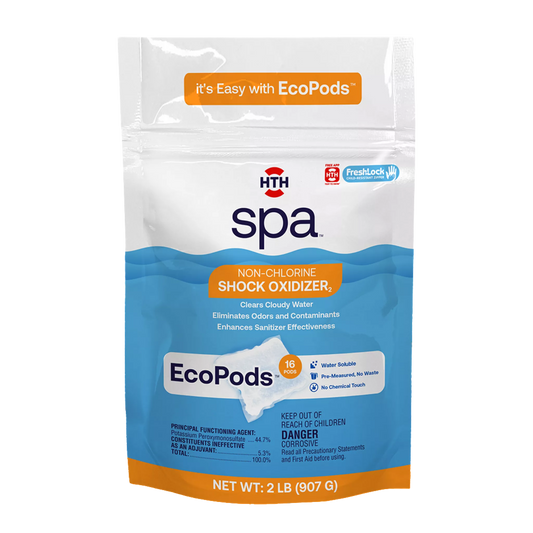
      Add HTH spa™ Non-Chlorine Shock Oxidizer granules or HTH spa™ Non-Chlorine Shock Oxidizer EcoPods to the hot tub with jets running. EcoPods are the same product in a convenient pod format; granules are a different form. This oxidizes waste and converts dormant bromide ions back into active bromine, restoring sanitizer levels. Run jets for 15–20 minutes, test bromine, and wait until it is in the 2–4 ppm range before soaking. Shock weekly or after every heavy-use session.

    • Why is my hot tub still cloudy after shocking?

      If your hot tub remains cloudy after shocking, check that the filter is clean and the water chemistry is balanced, as a dirty filter or high pH or alkalinity can contribute to cloudy water. Also confirm that you used the correct shock dose for your hot tub size and water conditions. If cloudiness persists beyond 24 hours, use HTH spa™ Clarifier to help the filter capture fine suspended particles.

    • Can I shock my hot tub too much?

      Yes. Excessive shock — especially chlorine-based — can cause sanitizer levels to spike well above 5 ppm, which irritates skin and eyes, bleaches swimwear, and degrades acrylic surfaces over time. If you accidentally over-shock, remove the cover, run the jets, and allow the hot tub to off-gas naturally. Do not use the tub until sanitizer drops to 2–4 ppm (bromine) or 3–5 ppm (chlorine).

    • Should I shock my hot tub before or after use?

      After use is the most effective time to shock — you are oxidizing the contaminants that were just introduced by bathers. Shocking after use gives the oxidizer time to work overnight and restores sanitizer levels for the next session. If you shock before use, you risk elevated sanitizer levels and must wait for them to normalize before soaking.